Harvard Peabody Museum
Azadeh Akhlaghi
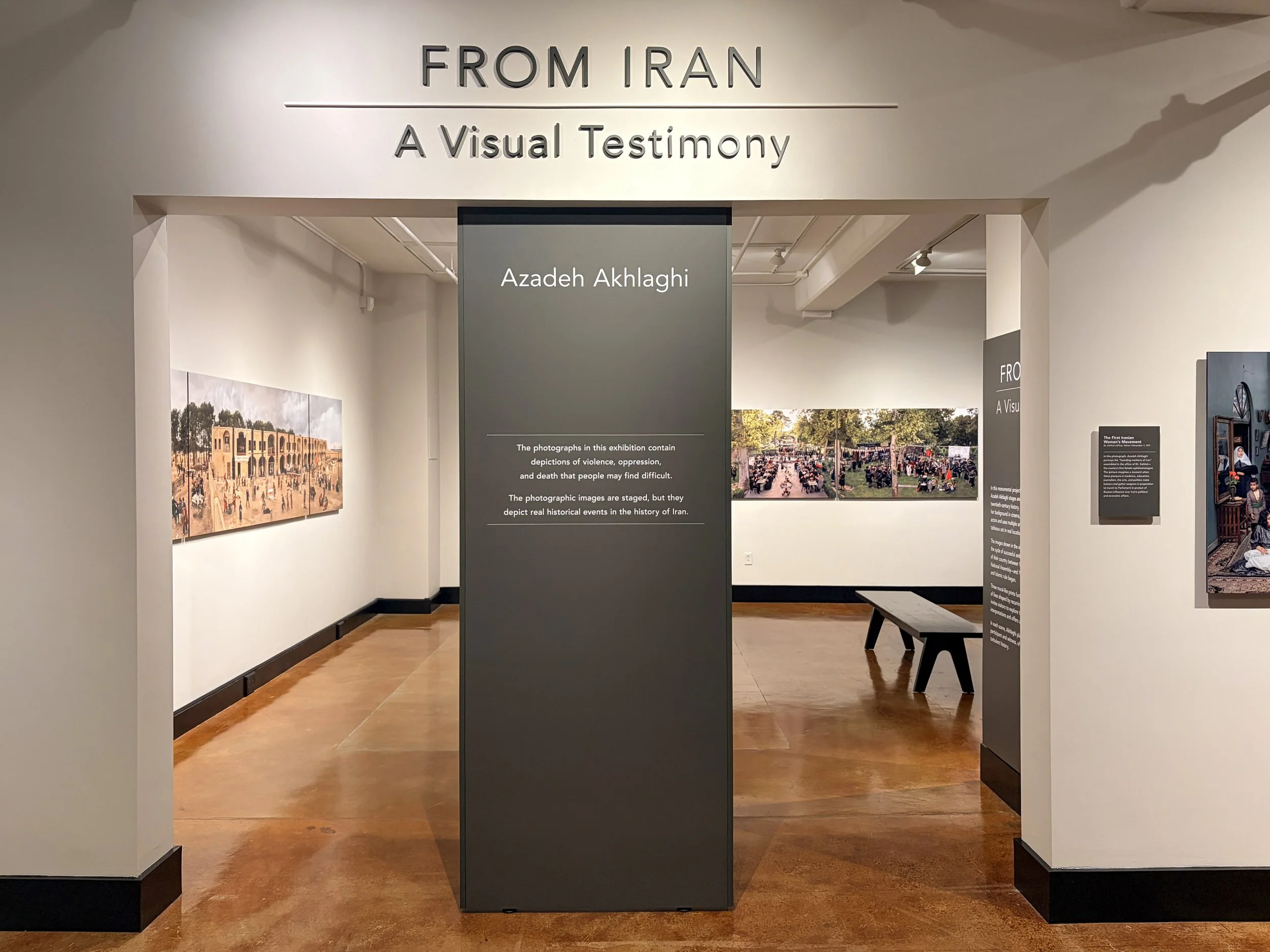
From Iran: A Visual Testimony
Exhibition
The Peabody Museum of Archaeology & Ethnology at Harvard University presents From Iran: A Visual Testimony, a new exhibition by Iranian photographer and filmmaker Azadeh Akhlaghi. The exhibition has been in development since she was named the museum’s 2019 Robert Gardner Fellow in Photography. From Iran: A Visual Testimony will be on view Friday, May 15, 2026–Sunday, March 21, 2027, at the Peabody Museum of Archaeology & Ethnology (11 Divinity Avenue, Cambridge, MA).
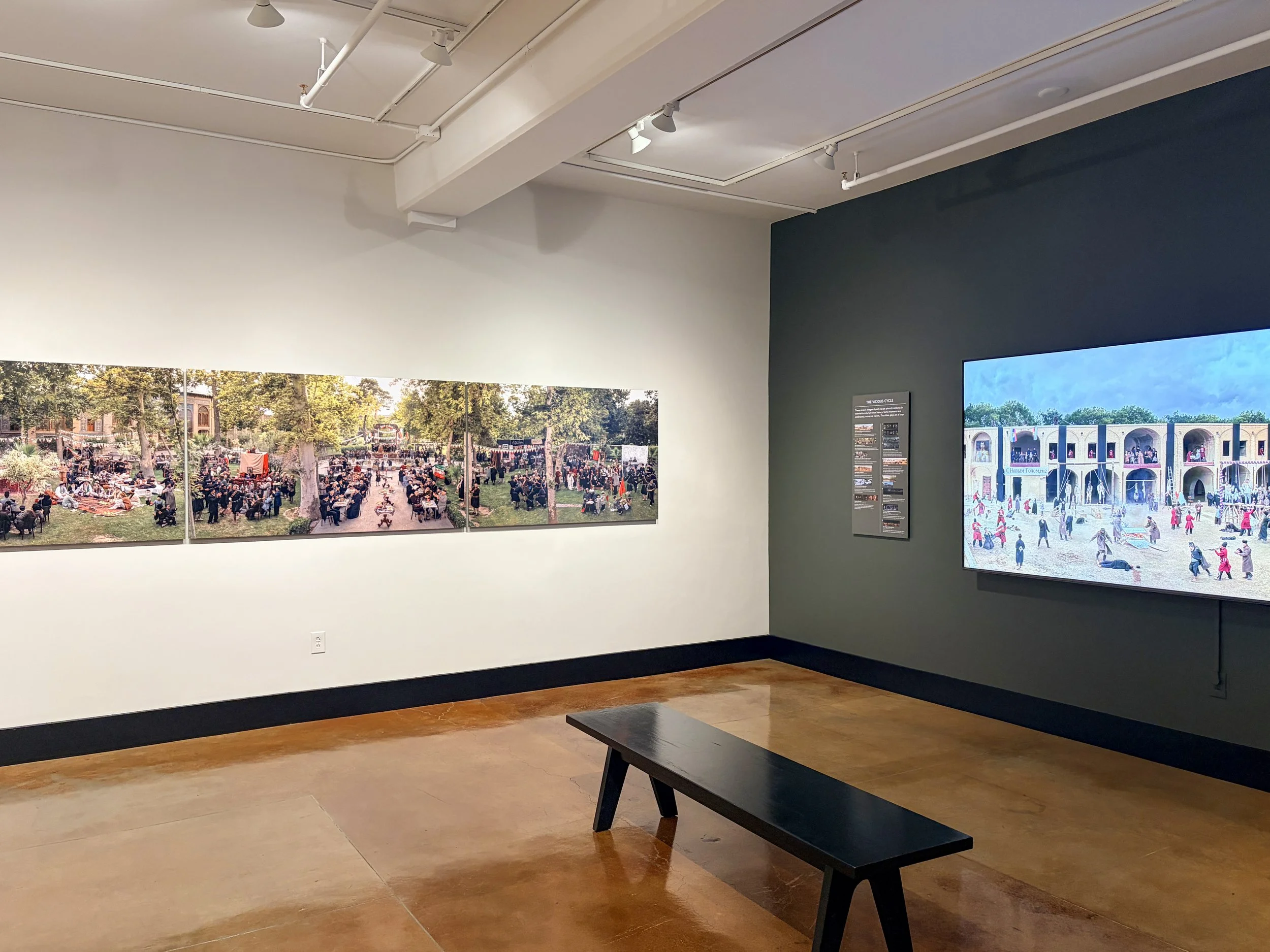
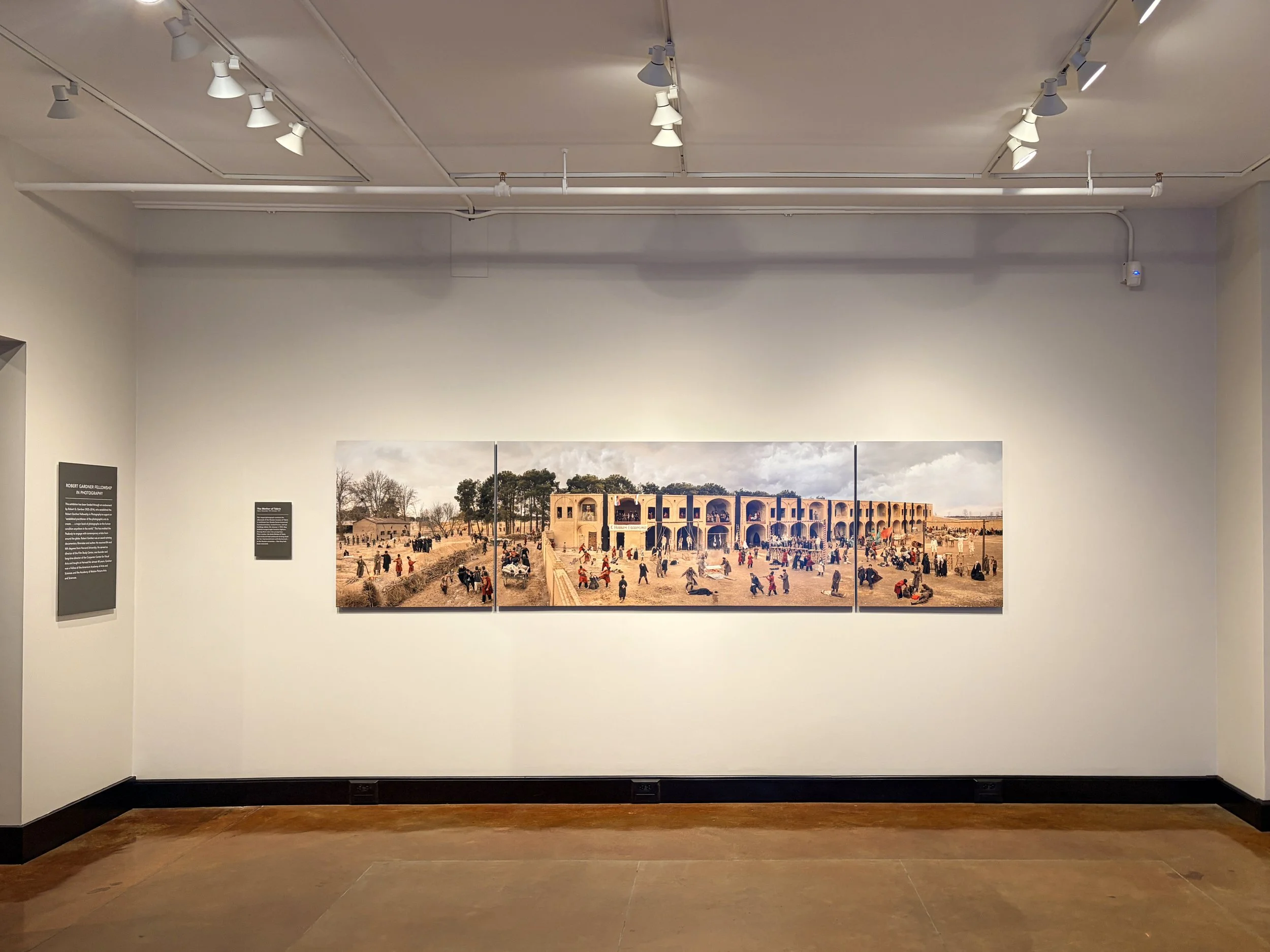
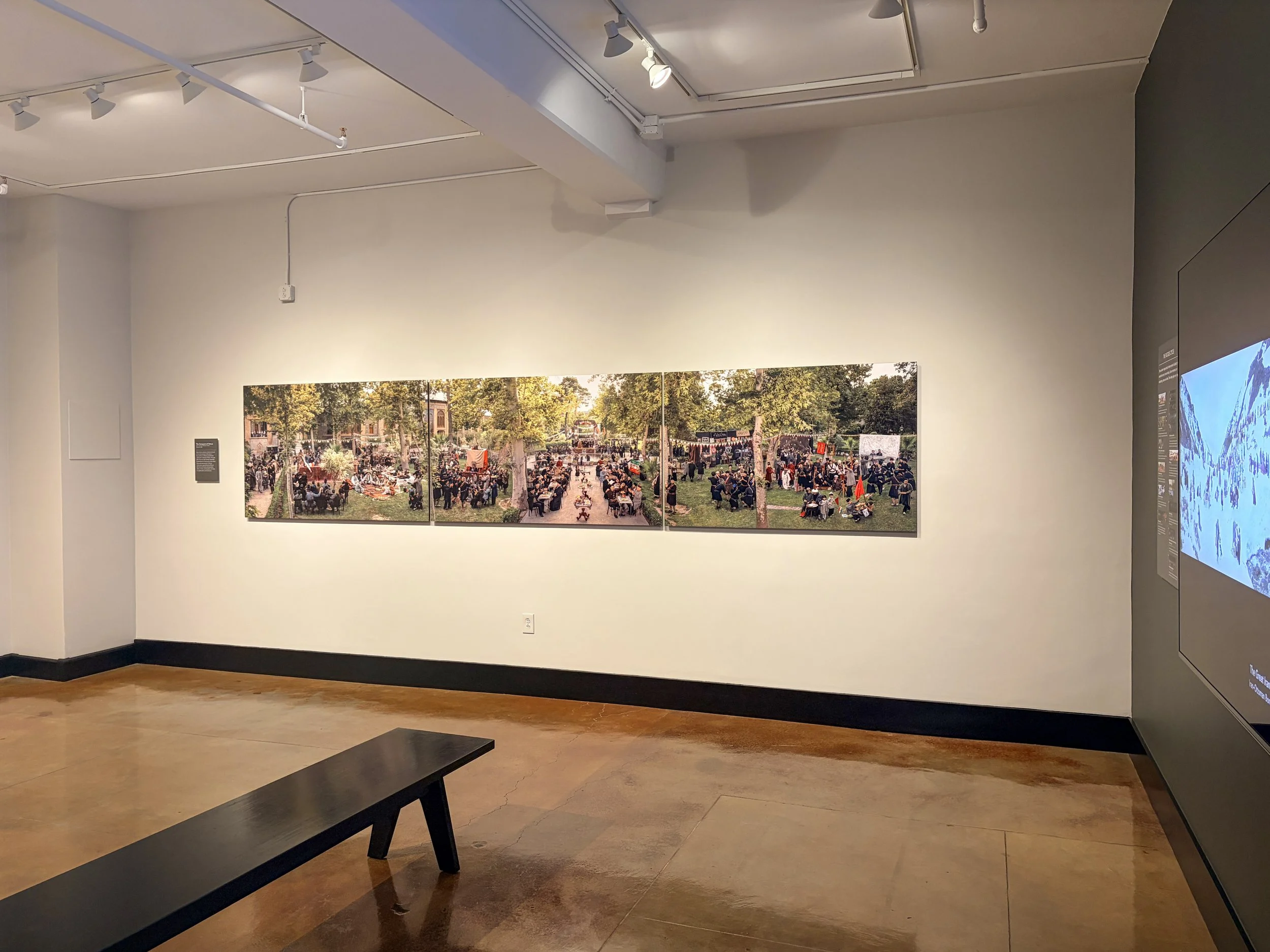
Created over fourteen years, Akhlaghi’s project stages and photographs pivotal moments from Iran’s tumultuous twentieth-century history. Drawing on meticulous archival research and her background in cinema, she casts professional and nonprofessional actors and photographs each scene from multiple angles, reimagining historical events as complex tableaux set in real locations in Iran.
In sixteen images—three presented as large-scale prints—Akhlaghi depicts eleven pivotal incidents that highlight the cycle of successful and failed efforts by Iranians to reclaim control of their country between 1908—when the Shah quashed the first National Assembly—and 1979, when the monarchy was overthrown and Islamic rule began.
The exhibition’s video loop depicts incidents that illuminate recurring cycles of successful and failed efforts by Iranians to reclaim control of their country.
About Azadeh Akhlaghi
Azadeh Akhlaghi (b. 1978, Shiraz) grew up in Mashhad, Iran, and studied computer science at the Royal Melbourne Institute of Technology in Australia. She later returned to Iran, worked as assistant director to filmmaker Abbas Kiarostami (2005–2008), and made short films before turning to staged photography in 2009. She won the 2009 UN-Habitat Youth Photography Competition and was a finalist for the 2016 Sovereign Asian Art Prize. Her work By an Eyewitness has been exhibited internationally, including in the United States, London, Paris, Shanghai, Seoul, and Tehran.
“By reconstructing events that were never photographed, I seek to question the authority of images and the ways collective memory is shaped through absence as much as through evidence.” — Azadeh Akhlaghi
Involvement
Produced (3) large dye-sublimated Chromaluxe aluminum panels, finished with aluminum inset mounts.
Artwork

The First Iranian Women’s Movement
Dr. Kahhal’s Office, Tehran | December 1, 1911
After the reopening of the Second Parliament, Iran invited American financial adviser Morgan Shuster to reform its finances. In November 1911, Russia issued an ultimatum demanding his expulsion, triggering mass protests. According to Shuster, armed women marched on parliament in defiance. This photograph imagines their preparation, organized by early women’s equality activists linked to Danesh newspaper.
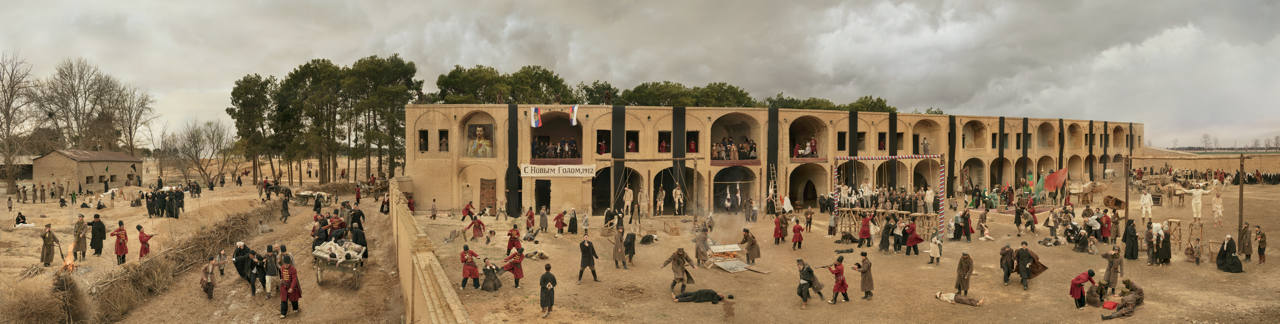
The Mother of Tabriz
Tabriz | December 1911–October 1917 After Russia forced the dissolution of Iran’s parliament in December 1911, Russian troops occupied Tabriz and carried out brutal reprisals. Photographs of the massacre, later published by E. G. Browne, shocked the world. Among the victims were two boys executed on Ashura, whose mother’s grief inspired The Mother of Tabriz. The mother appears on the right. She is accompanied by a young girl and consoled by a woman (depicted by Akhlaghi herself).